How to Research the History of Your Local Manor House: A Beginner's Guide
October 08, 2026 - Manor History

October 06, 2026 - Country Estates
Every manor that survives to be restored has already survived something worse than neglect: an enthusiastic owner. Rot, damp and a slipped slate are honest problems with honest solutions. The damage done by good intentions is subtler and far harder to undo — a cement render here, a dropped ceiling there, a sash window replaced because repairing it looked like bother.
Most of these mistakes don't come from carelessness. They come from treating an old house as a shell waiting for a design, rather than a building that already has strong opinions about materials, proportions and light. Below are the errors that turn up again and again, and what to do instead.
Before anyone chooses a paint colour or a sofa, the house needs to be documented. Walk every room with a camera and a notebook and record what is actually there: the height of the skirting, the profile of the cornice, the position of every door and window and blocked-up opening. Photograph the "ghost marks" — the shadow where a range once stood, the discoloured rectangle where a picture hung, the line on the floor where a partition met.
Then work out what is original and what is later. A manor is usually a conversation between centuries: a Tudor core, a Georgian re-front, Victorian services, a 1950s kitchen. Write the dates down as best you can, room by room. An hour spent in the county archive or with the local buildings record office will save you months — and a bundle of photographs, dated and annotated, will be the single most useful thing you hand the next owner.
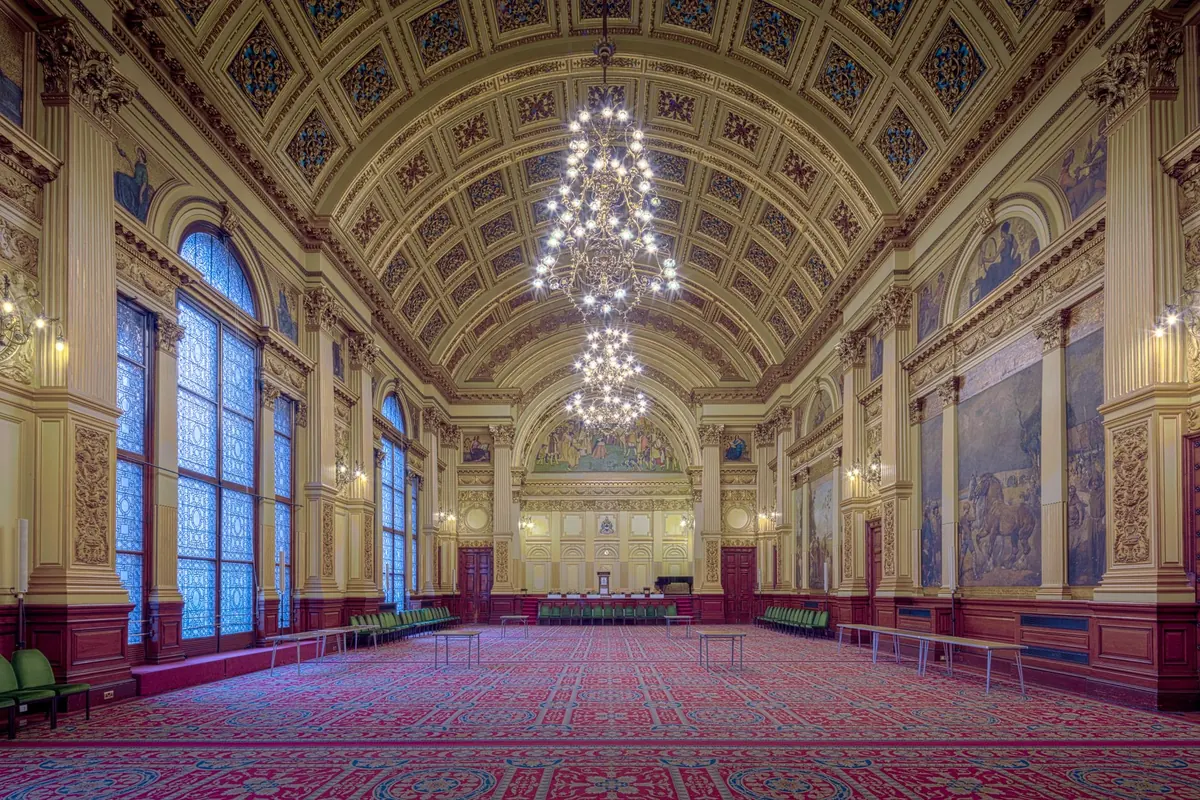
Ceiling height governs everything else in a period room. A 3.6-metre ceiling with a mean little skirting and no cornice reads as a hotel function suite, no matter how expensive the furniture. The vertical rhythm — skirting, dado, picture rail, cornice — is what makes a tall room feel resolved rather than empty.
So the common errors are all vertical. Raising door heads to gain height, or lowering them for warmth. Replacing tall sashes with short modern ones and losing the deep window reveal. Boxing in a chimney breast with studwork to hide a pipe. Dropping a ceiling so downlights fit above it. Each of these quietly changes the geometry that the room was designed around, and no amount of redecoration will put it back.
A useful discipline: if the furniture doesn't fit, buy different furniture. If a cornice has been lost, take a profile from a surviving room, have it run in plaster or cast from a rubber mould, and get one room absolutely right before you commit to five.
This is the mistake that costs the most, because the damage is often hidden for years. Solid-walled buildings were built to absorb and release moisture. Cement render, gypsum plaster, waterproof sealants and modern vinyl or acrylic masonry paints trap that moisture instead, and it finds the timbers and the floor plates.
A short list to keep by the door:
Where damp, structural movement or timber decay is involved, bring in a surveyor or conservation-accredited specialist before work starts rather than after. That is a case for professional advice, not improvisation.
There is a strong pull towards crispness. Everything stripped, everything re-pointed, everything level — and the house ends up looking like a very expensive new build wearing period clothes. Visitors can't read its age. Nothing tells them it has been standing there since 1610.
Restraint is the harder skill. Painted panelling that has been painted for two hundred years was meant to be painted; stripping it to bare oak because bare oak looks rustic is a modern preference imposed on an old room. Uneven floors, wavy glass, worn flagstones and a slightly out-of-true wall are assets. So are good later additions: a Victorian range, a handsome 1930s tiled bathroom, a well-made Edwardian door. They are part of the story, not clutter to be swept away.
Favour reversible work. In year one, almost nothing you do should be impossible to undo in year ten.
Details carry period character more reliably than any colour scheme. A room can survive a bold wall colour and be ruined by the wrong architrave. The usual culprits are standard door linings in an eighteenth-century room, deep modern skirting under a low ceiling, MDF mouldings with soft profiles, and raised-panel cupboard doors in a room that never had them.
The remedy is simple, if slow. Measure an existing moulding and take a rubbing or a section drawing to a joiner or moulding maker. Reuse original doors, shutters, ironmongery and hinges wherever possible; if a hinge must be replaced, keep the old one in a box. Repair sash windows rather than replacing them — new cords, new beading, brush seals rather than expanding foam — because original glass and original proportions are worth more than any modern unit's performance figure.
Downlights punched through a cornice. Trunking chased across panelling. A radiator under every window, chopping the room's proportions in half. An extractor fan vented through a shutter. These are decisions made by trades working quickly, and they are entirely avoidable if the services are planned before the decoration.
Route cables and pipes through secondary spaces: cupboards, risers in later partitions, voids with proper access panels. Choose heating that sits quietly in the room — slim cast-iron radiators, trench convectors, or a well-placed stove where one originally stood. Light from lamps and wall lights at picture-rail height rather than the ceiling. Any work on old wiring needs a qualified electrician, and it's worth asking them to plan the routes with the building in mind. Leave a services drawing behind for whoever comes next.
If you can, live in the house for a full year before doing much at all. You will learn where the draughts come from in February, where water appears after a storm, and which rooms you actually use. That knowledge is worth more than any plan drawn at a desk.
Then work in this order:
Do one room at a time and finish it properly, so you learn on a small scale. If the building is listed, speak to the local conservation officer early — consent is easier to obtain before work than after it, and professional guidance at that stage is money well spent.
The aim isn't a new house inside an old shell. It's a house that still reads as itself: a bit uneven, a bit layered, and entirely at home in its own century.
Photo: Michael D Beckwith / Pexels

Trace the story of a local manor house using building clues, maps, deeds and manorial records — a practical...
Buying a historic manor is a long game. These five common mistakes — from hidden maintenance bills to land-use...
October 06, 2026 - Country Estates
Copyright © 2026 The Manor Chronicle. All Right Reserved.